 VapeWholesaleHub
Spotting Defects in Mountain Dew Ice Before Shipment — North America
A mountain dew ice programme fails in predictable ways: a specification nobody wrote down, a sample nobody retained, and a lead time nobody stress tested. Here is how to close those three gaps before they cost you a container.
How Mountain Dew Ice Fits the Assortment
Decide early whether mountain dew ice is a traffic driver or a margin line in your store. The answer changes how you price it, where you place it and how hard you push it at the counter.
Getting Mountain Dew Ice to Your Warehouse
Consolidating mountain dew ice with other lines is often the biggest single saving available to a mid size importer. The unit cost does not change but the landed cost does, sometimes materially.
Plan the mountain dew ice customs paperwork at the same time as the order, not when the goods are on the water. A missing document costs more in demurrage than the entire freight saving from a cheap forwarder.
Pricing and Margin
When you model mountain dew ice pricing, build in a realistic shrink figure. Even a well run line loses a small percentage to damage, expiry and sampling. Pretending that number is zero is how a healthy looking margin turns negative.
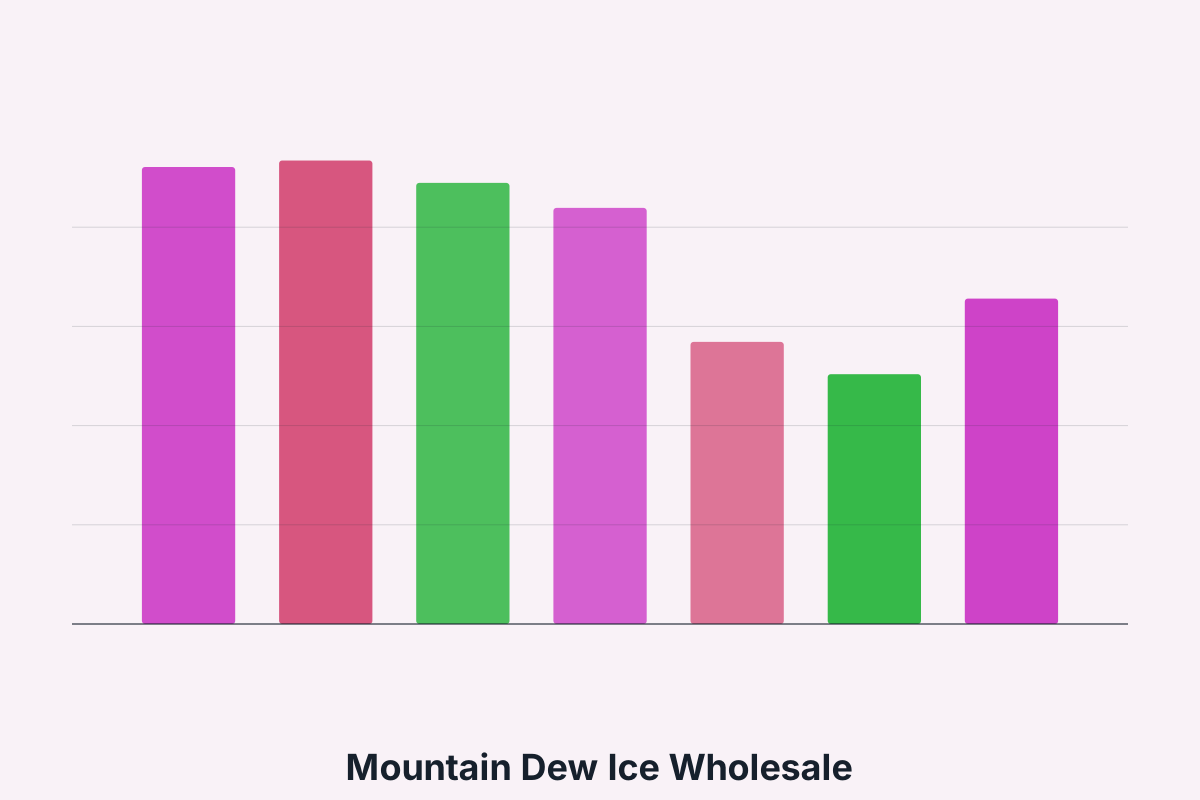
Indicative reference points for planning purposes: entry tier from USD 1.01 per unit at 2000 units, mid tier at USD 1.85, and volume tier at USD 0.73 for full container quantities. These figures move with specification, packaging and freight, so treat them as a shape rather than a quote.
Market Signals
Traceability is moving from a nice-to-have to a requirement in several mountain dew ice markets. Building the habit now is cheaper than retrofitting record keeping under pressure later.
Merchandising and Listing Tips
Keep the mountain dew ice range tidy. A half empty shelf reads as a dying line, and customers interpret it that way faster than any signage can correct.
Practical Checklist
- Confirm the current customs classification with your own broker.
- Model landed cost, not ex-works price, when comparing quotes.
- Ask how the factory measures puff count, then compare like with like.
- Keep sealed retained samples from every production batch.
- Check carton dimensions against your freight quote before confirming.
- Rotate stock by batch code rather than by delivery date.
Frequently Asked Questions
Is there support for in-store material?
Yes. Shelf talkers, counter cards and simple planogram suggestions are available for mountain dew ice ranges that reach a sensible volume. Most retailers find the plain strength and flavour cards do the most work.
What information do you need to quote?
Target specification, approximate quantity, destination and any packaging requirement. With those four we can usually come back with a costed option the same working day rather than a request for more information.
How are price changes handled on repeat orders?
{K} pricing is reviewed against input costs and volume rather than adjusted casually. Any change is confirmed in writing before the next order is scheduled, with the reason stated so you can judge it yourself.
What happens if my market changes its rules?
Regulations move, and packaging or documentation sometimes has to follow. We keep approved artwork files on hand so that a required change is a reprint rather than a redesign, which keeps the cost and delay down.
Next Step
The best mountain dew ice programmes we see are run by buyers who write things down. Specifications, batch records, complaint thresholds - the paperwork is the advantage.
Related Reading
- Mountain Dew Ice Customer Education That Reduces Complaints — Online Sellers
- Mountain Dew Ice Supplier Scorecard Template — Retail Chains
- Mountain Dew Ice Handling Product Recalls Professionally — Established Chains
- Mountain Dew Ice Carton Engineering and Freight Density — New Distributors
- Mountain Dew Ice Clearance Strategies That Protect Margin — Landed Cost Worked Through
- Setting Minimum Order Quantities for Mountain Dew Ice — New Distributors