 VapeWholesaleHub
Mountain Dew Ice vs Standard Alternatives: What Changes for Your Shelf — North America
There is no clever trick to buying mountain dew ice well. There is a short list of things worth checking and a long list of things that distract from them. This page is an attempt at the short list.
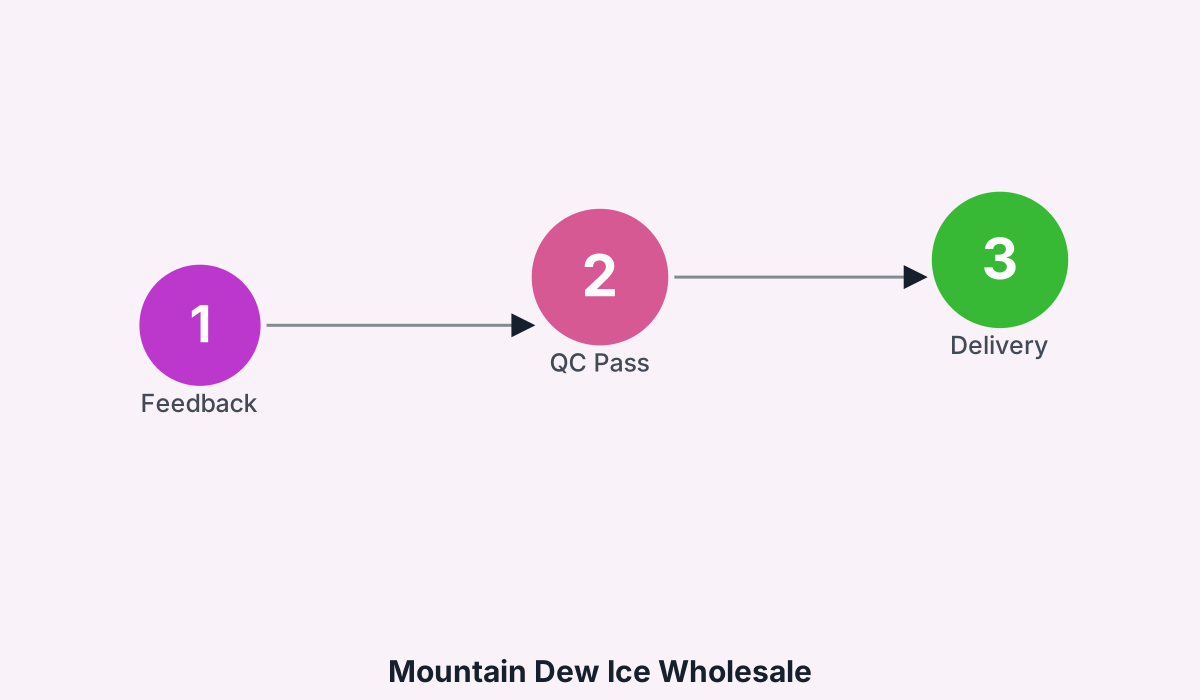
Quality Control in Practice
AQL sampling gets a lot of attention, but for mountain dew ice the more useful habit is simply measuring the same three things on every single batch. Trend lines catch problems that pass/fail checks miss.
- Start with a mixed carton and let your own sell-through decide.
- Rotate stock by batch code rather than by delivery date.
- Agree the tolerance band in writing before approving artwork.
- Keep sealed retained samples from every production batch.
- Plan the switch from air to sea freight before you need it.
Modelling a Healthy Margin
Hold a small mountain dew ice buffer in your pricing model for currency movement. A few percent on a container is a real number, and it is easier to plan for than to absorb.
Margin on mountain dew ice is rarely lost at the till. It is lost through dead stock, returns and emergency air freight. A slightly higher landed cost with predictable lead time usually beats the cheapest quote on the spreadsheet.
Indicative reference points for planning purposes: entry tier from USD 2.00 per unit at 2000 units, mid tier at USD 1.33, and volume tier at USD 0.53 for full container quantities. These figures move with specification, packaging and freight, so treat them as a shape rather than a quote.
What to Fix Before Approving Mountain Dew Ice
Revisit the mountain dew ice specification after every third order. Small improvements compound, and factories take a buyer more seriously when the document has clearly been used.
Specification sheets are where a mountain dew ice deal is won or quietly lost. Two samples can look and taste the same while using different coil wire, different wicking density and different tolerances on the mouthpiece. Those details decide how the unit behaves in week three rather than minute three.
| Product category | Disposable |
|---|---|
| Resistance band | 1.2 - 1.4 ohm |
| Capacity tolerance | +/- 5% |
| Puff count method | Declared by capacity |
| Master carton | 200 units |
| Carton weight | 12.2 kg |
| Shelf life | 18 months |
| Storage | 15-25 C, dry, away from direct light |
Trends Worth Watching
Retailers report that mountain dew ice customers are asking more specific questions than they did two years ago. That favours ranges with clear, simple information over ranges with clever marketing.
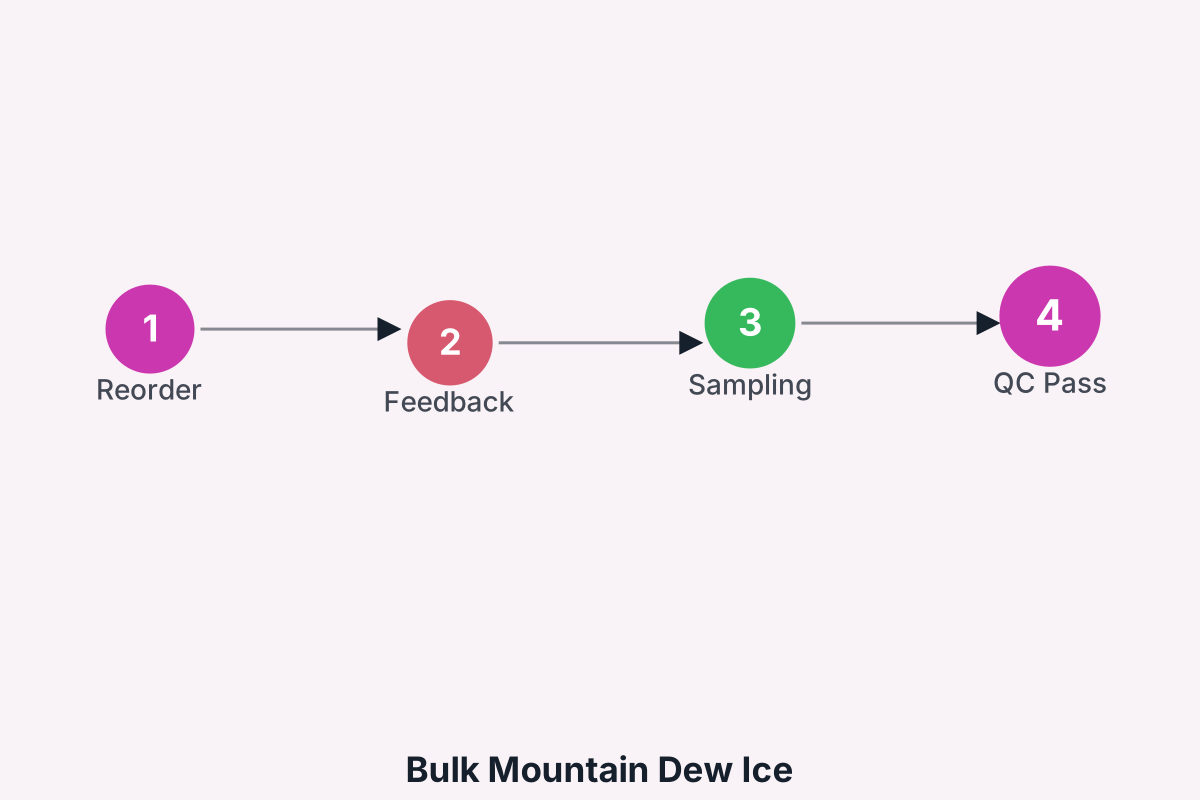
Turning Mountain Dew Ice Into Repeats
Online, shoot mountain dew ice at a consistent scale across the range. Customers compare by eye, and inconsistent product photography creates returns that have nothing to do with the product.
Practical Checklist
- Start with a mixed carton and let your own sell-through decide.
- Agree the tolerance band in writing before approving artwork.
- Write the complaint threshold into the order terms.
- Keep sealed retained samples from every production batch.
- Model landed cost, not ex-works price, when comparing quotes.
- Confirm the current customs classification with your own broker.
Frequently Asked Questions
What is the usual minimum order for mountain dew ice?
For a standard production run the minimum is normally one master carton per flavour, though mixed cartons can be arranged for a first order. If you are testing the line, ask about a sample pack first and treat the freight as part of your research budget.
How long does a mountain dew ice order take to arrive?
Production typically takes ten to eighteen working days after artwork approval, and transit depends on the method you choose. Air express is fastest, sea freight is cheapest at volume. We confirm both at quotation so there is no surprise later.
What does a sample pack usually include?
A typical mountain dew ice sample pack covers the strengths or variants you are most likely to list, packed so you can evaluate them side by side. Tell us which lines you are considering and we will match the pack to that rather than sending a generic selection.
What if a batch does not match the sample?
Keep the retained samples from the approval stage. If a delivered batch measurably differs, we compare against the retained set and resolve it against the production record. This is why we insist on sealed retained units from every run.
How are price changes handled on repeat orders?
{K} pricing is reviewed against input costs and volume rather than adjusted casually. Any change is confirmed in writing before the next order is scheduled, with the reason stated so you can judge it yourself.
Next Step
If you are comparing options right now, send us the specification you have been quoted elsewhere. A side by side reading usually shows where the price difference actually comes from, and that is the most useful first conversation to have.
Related Reading
- Mountain Dew Ice Market Demand: Reading the Numbers — Oceania
- Pricing Mountain Dew Ice for Healthy Retail Margins — Container-Scale Orders
- Mountain Dew Ice Safety Stock Levels for Import Programmes — Real Numbers Only
- Negotiating Mountain Dew Ice Contracts With Overseas Factories — Step by Step
- Common Mountain Dew Ice Mistakes New Distributors Make — Small Batch Buyers
- Mountain Dew Ice Trade Show Buying Tactics — the Middle East