 VapeWholesaleHub
Mountain Dew Ice Tamper Evidence and Seal Integrity — Private Label Programmes
There is no clever trick to buying mountain dew ice well. There is a short list of things worth checking and a long list of things that distract from them. This page is an attempt at the short list.
Inspection Before Dispatch
AQL sampling gets a lot of attention, but for mountain dew ice the more useful habit is simply measuring the same three things on every single batch. Trend lines catch problems that pass/fail checks miss.
Random checks are fine, but weight the sample towards the start and end of a mountain dew ice production run. Those are where a line is most likely to drift.
- Check carton dimensions against your freight quote before confirming.
- Start with a mixed carton and let your own sell-through decide.
- Ask how the factory measures puff count, then compare like with like.
- Write the complaint threshold into the order terms.
- Rotate stock by batch code rather than by delivery date.
Where Demand Is Heading
The mountain dew ice category is consolidating around suppliers who can document what they ship. Buyers who built that requirement into their process early are now finding it much easier to scale.
Traceability is moving from a nice-to-have to a requirement in several mountain dew ice markets. Building the habit now is cheaper than retrofitting record keeping under pressure later.
Reading a Mountain Dew Ice Spec Sheet
When we write a mountain dew ice specification with a distributor, we fix four things first: the resistance band, the liquid capacity tolerance, the puff count methodology and the packaging master carton. Everything else can flex without changing the customer experience.
| Product category | Open system |
|---|---|
| Resistance band | 0.6 - 0.8 ohm |
| Capacity tolerance | +/- 5% |
| Puff count method | Machine cycle 2s on / 18s off |
| Master carton | 100 units |
| Carton weight | 11.2 kg |
| Shelf life | 12 months |
| Storage | 15-25 C, dry, away from direct light |
Positioning Mountain Dew Ice on Your Shelf
Decide early whether mountain dew ice is a traffic driver or a margin line in your store. The answer changes how you price it, where you place it and how hard you push it at the counter.
Range decisions for mountain dew ice should start from shelf space, not from a supplier catalogue. Count the facings you actually have, then decide how many of them this line deserves against what it currently earns.
Getting Mountain Dew Ice to Your Warehouse
Split mountain dew ice shipments across two sailings when the order is large enough. It costs slightly more but removes the risk of a single event wiping out a full quarter of stock.
Modelling a Healthy Margin
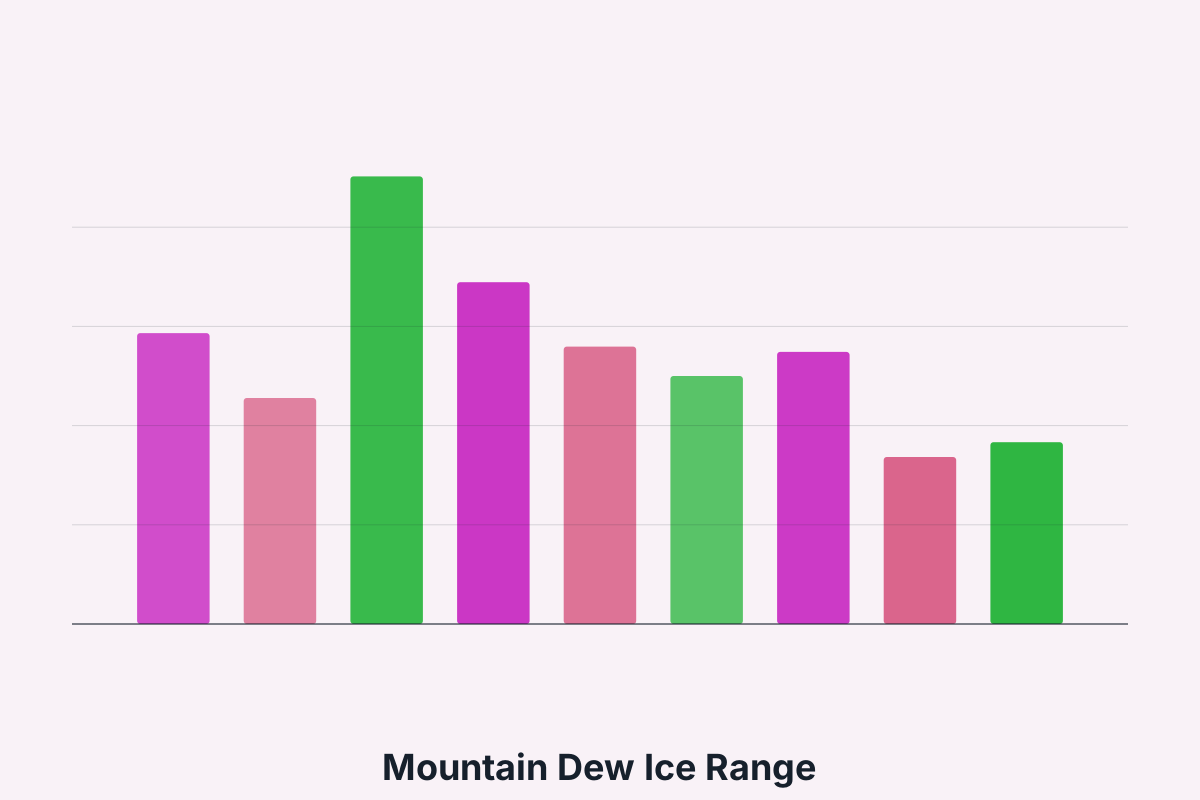
Build mountain dew ice price tiers around order sizes your customers actually place. Tiers that only make sense on a spreadsheet get ignored, and you end up discounting ad hoc instead.
Hold a small mountain dew ice buffer in your pricing model for currency movement. A few percent on a container is a real number, and it is easier to plan for than to absorb.
Indicative reference points for planning purposes: entry tier from USD 1.67 per unit at 2000 units, mid tier at USD 0.86, and volume tier at USD 0.68 for full container quantities. These figures move with specification, packaging and freight, so treat them as a shape rather than a quote.
Practical Checklist
- Keep sealed retained samples from every production batch.
- Confirm the current customs classification with your own broker.
- Model landed cost, not ex-works price, when comparing quotes.
- Start with a mixed carton and let your own sell-through decide.
- Check carton dimensions against your freight quote before confirming.
- Rotate stock by batch code rather than by delivery date.
Frequently Asked Questions
How do you handle a short shipment?
Cartons are counted and weighed before dispatch and the figures are shared with you. If something is short on arrival, the packing record and the carrier documentation are both available, which keeps the claim straightforward.
How are price changes handled on repeat orders?
{K} pricing is reviewed against input costs and volume rather than adjusted casually. Any change is confirmed in writing before the next order is scheduled, with the reason stated so you can judge it yourself.
What if a batch does not match the sample?
Keep the retained samples from the approval stage. If a delivered batch measurably differs, we compare against the retained set and resolve it against the production record. This is why we insist on sealed retained units from every run.
Can I mix strengths in one order?
In most cases yes, as long as each strength meets the minimum run length. Mixed strength cartons are popular with retailers building their first display because they show the full ladder without over committing.
Next Step
Send us your current mountain dew ice specification even if you are not planning to move suppliers. A second read of a document you use every month is usually worth the ten minutes.
Related Reading
- Mountain Dew Ice Copy That Answers Buyer Objections — Southeast Asia
- Mountain Dew Ice Pallet Configuration for Mixed Orders — Latin America
- Mountain Dew Ice Barcode and Labelling Requirements — Small Batch Buyers
- Mountain Dew Ice Storage Life Extension Through Better Handling — Cross-Border Trade
- Mountain Dew Ice Damage Claims and How to Avoid Them — North America
- Mountain Dew Ice vs Standard Alternatives: What Changes for Your Shelf — Private Label Programmes