 VapeWholesaleHub
Mountain Dew Ice Tamper Evidence and Seal Integrity — a Factory Floor View
Mountain Dew Ice has moved from a niche listing to a category that most vape retailers simply have to carry. That popularity brought a flood of near identical offers. This guide explains how to separate a repeatable supply chain from a lucky sample.
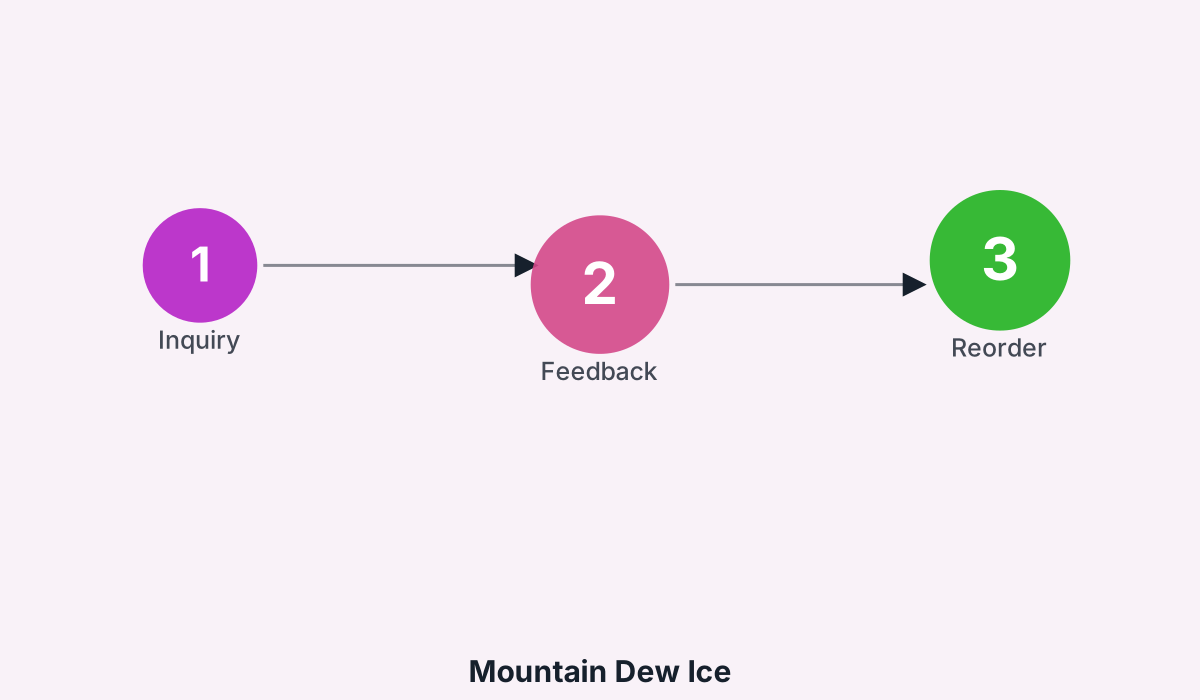
Where Mountain Dew Ice Sits in the Range
Before anything else, decide which customer you are buying mountain dew ice for. A convenience counter with limited shelf depth needs a tight range that turns quickly, while a specialist shop can carry a deeper ladder of options and educate buyers into higher ticket lines.
One useful exercise: list every mountain dew ice line you stock and mark the last date each one sold at full price. Anything without a recent full price sale is taking space from something that would use it better.
Pricing and Margin
Tiered pricing works best when the tiers match real customer behaviour. Most mountain dew ice buyers will take the second tier if the step is modest and the third tier only if they can see a genuine reason to hold more stock.
Indicative reference points for planning purposes: entry tier from USD 0.94 per unit at 2000 units, mid tier at USD 0.98, and volume tier at USD 1.35 for full container quantities. These figures move with specification, packaging and freight, so treat them as a shape rather than a quote.
Getting Mountain Dew Ice to Your Warehouse
Freight is the hidden half of mountain dew ice unit economics. A denser master carton can save more per unit than a hard negotiation on factory price, because the saving repeats on every reorder rather than once.
Air freight makes sense for a first mountain dew ice order when you need to test demand quickly, but almost every steady programme moves to sea freight once volumes stabilise. Planning that switch early avoids a painful margin squeeze later.
How Mountain Dew Ice Batches Are Checked
The defect rate that matters is the one your customer experiences, not the one the factory reports. Bridge that gap by inspecting the way a customer would open the box, not the way a line worker packs it.
Train whoever receives mountain dew ice cartons to note anything unusual at the point of unloading. Damage discovered at the dock is a freight claim; damage discovered a week later is your problem.
- Check carton dimensions against your freight quote before confirming.
- Agree the tolerance band in writing before approving artwork.
- Ask how the factory measures puff count, then compare like with like.
- Keep sealed retained samples from every production batch.
- Model landed cost, not ex-works price, when comparing quotes.
Reading a Mountain Dew Ice Spec Sheet
Revisit the mountain dew ice specification after every third order. Small improvements compound, and factories take a buyer more seriously when the document has clearly been used.
Two specifications that matter more than buyers expect: the seal integrity after a drop test and the consistency of the draw from first use to last. Both are measurable before you commit to volume.
| Product category | Closed pod |
|---|---|
| Resistance band | 1.0 - 1.2 ohm |
| Capacity tolerance | +/- 2% |
| Puff count method | Declared by capacity |
| Master carton | 120 units |
| Carton weight | 8.2 kg |
| Shelf life | 18 months |
| Storage | 15-25 C, dry, away from direct light |
Trends Worth Watching
One shift worth planning for: shorter mountain dew ice reorder cycles with smaller average drops. It favours suppliers with flexible production slots over those who only want large annual commitments.
Assortment rationalisation is the quiet trend in this category. Shops that cut their mountain dew ice range from twelve lines to five well chosen ones often report higher total sales, not lower.
Practical Checklist
- Rotate stock by batch code rather than by delivery date.
- Check carton dimensions against your freight quote before confirming.
- Keep sealed retained samples from every production batch.
- Confirm the current customs classification with your own broker.
- Start with a mixed carton and let your own sell-through decide.
- Plan the switch from air to sea freight before you need it.
Frequently Asked Questions
What is the usual minimum order for mountain dew ice?
For a standard production run the minimum is normally one master carton per flavour, though mixed cartons can be arranged for a first order. If you are testing the line, ask about a sample pack first and treat the freight as part of your research budget.
What if I only need a small first order?
That is normal and sensible. A mixed carton lets you test mountain dew ice in your own market before committing to a production run, and the specification you approve at that stage carries through to larger orders unchanged.
What if a batch does not match the sample?
Keep the retained samples from the approval stage. If a delivered batch measurably differs, we compare against the retained set and resolve it against the production record. This is why we insist on sealed retained units from every run.
How do you handle a short shipment?
Cartons are counted and weighed before dispatch and the figures are shared with you. If something is short on arrival, the packing record and the carrier documentation are both available, which keeps the claim straightforward.
Next Step
We would rather quote you accurately and lose the order than quote optimistically and lose the relationship. Ask us the awkward questions early.
Related Reading
- Mountain Dew Ice Pallet Configuration for Mixed Orders — Landed Cost Worked Through
- Mountain Dew Ice Clearance Strategies That Protect Margin — Step by Step
- Warehouse Layout Tips for Mountain Dew Ice Distributors — Step by Step
- Mountain Dew Ice Product Listings That Actually Convert — Specialist Vape Shops
- Common Mountain Dew Ice Mistakes New Distributors Make — Tight Margin Categories
- Mountain Dew Ice Market Demand: Reading the Numbers — Freight Included