 VapeWholesaleHub
Mountain Dew Ice Mouthpiece Geometry and Comfort — Three Price Tiers
Retailers rarely lose money on mountain dew ice because of price. They lose money because the first container was bought on a photograph. This page walks through what actually matters when you source mountain dew ice at scale, written from the buying desk rather than the marketing department.
How Mountain Dew Ice Fits the Assortment
Before anything else, decide which customer you are buying mountain dew ice for. A convenience counter with limited shelf depth needs a tight range that turns quickly, while a specialist shop can carry a deeper ladder of options and educate buyers into higher ticket lines.
Think about where mountain dew ice sits in your customer's week. If it is a weekly restock, breadth matters less than availability. If it is an occasional treat, flavour range and display story carry more weight.
Quality Control in Practice
Random checks are fine, but weight the sample towards the start and end of a mountain dew ice production run. Those are where a line is most likely to drift.
Random checks are fine, but weight the sample towards the start and end of a mountain dew ice production run. Those are where a line is most likely to drift.
- Keep sealed retained samples from every production batch.
- Write the complaint threshold into the order terms.
- Check carton dimensions against your freight quote before confirming.
- Confirm the current customs classification with your own broker.
- Model landed cost, not ex-works price, when comparing quotes.
Pricing and Margin
Hold a small mountain dew ice buffer in your pricing model for currency movement. A few percent on a container is a real number, and it is easier to plan for than to absorb.
Margin on mountain dew ice is rarely lost at the till. It is lost through dead stock, returns and emergency air freight. A slightly higher landed cost with predictable lead time usually beats the cheapest quote on the spreadsheet.
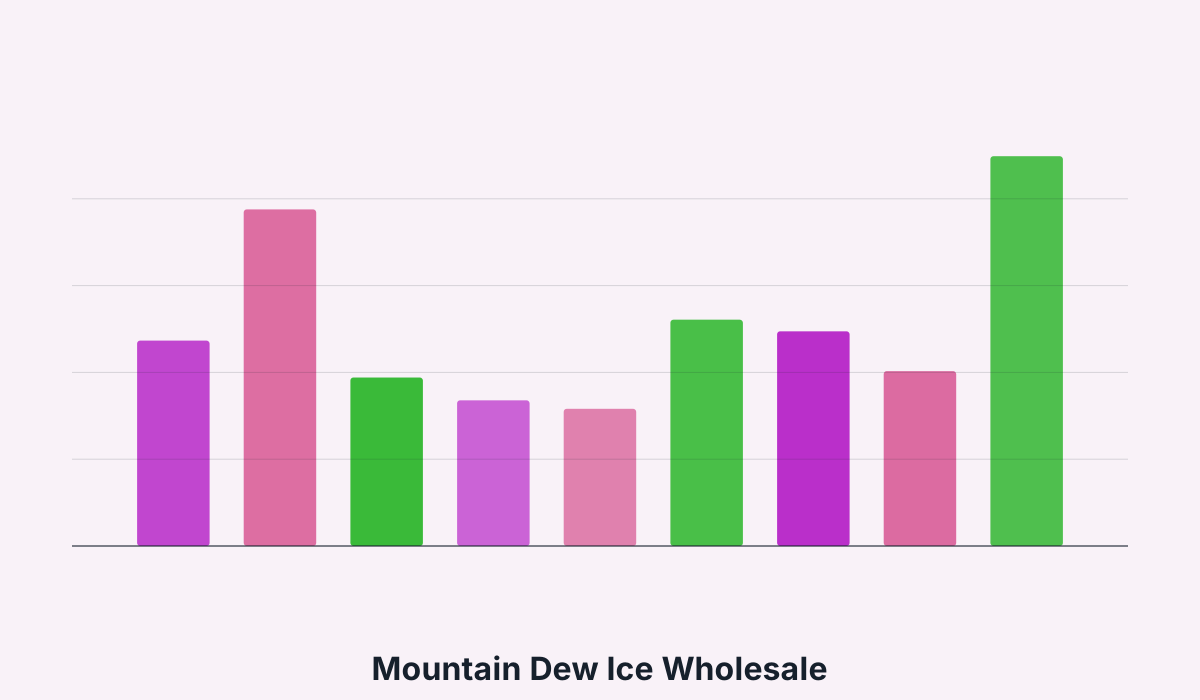
Indicative reference points for planning purposes: entry tier from USD 1.11 per unit at 1000 units, mid tier at USD 1.36, and volume tier at USD 1.06 for full container quantities. These figures move with specification, packaging and freight, so treat them as a shape rather than a quote.
Where Demand Is Heading
Demand for mountain dew ice has been steadily rebalancing. The early phase rewarded whoever could ship fastest; the current phase rewards whoever can ship the same thing twice. That shift favours buyers who invest in specification rather than price shopping.
Flavour cycles in mountain dew ice are shortening, which argues for smaller test orders and faster feedback loops rather than large speculative buys on a predicted winner.
Reading a Mountain Dew Ice Spec Sheet
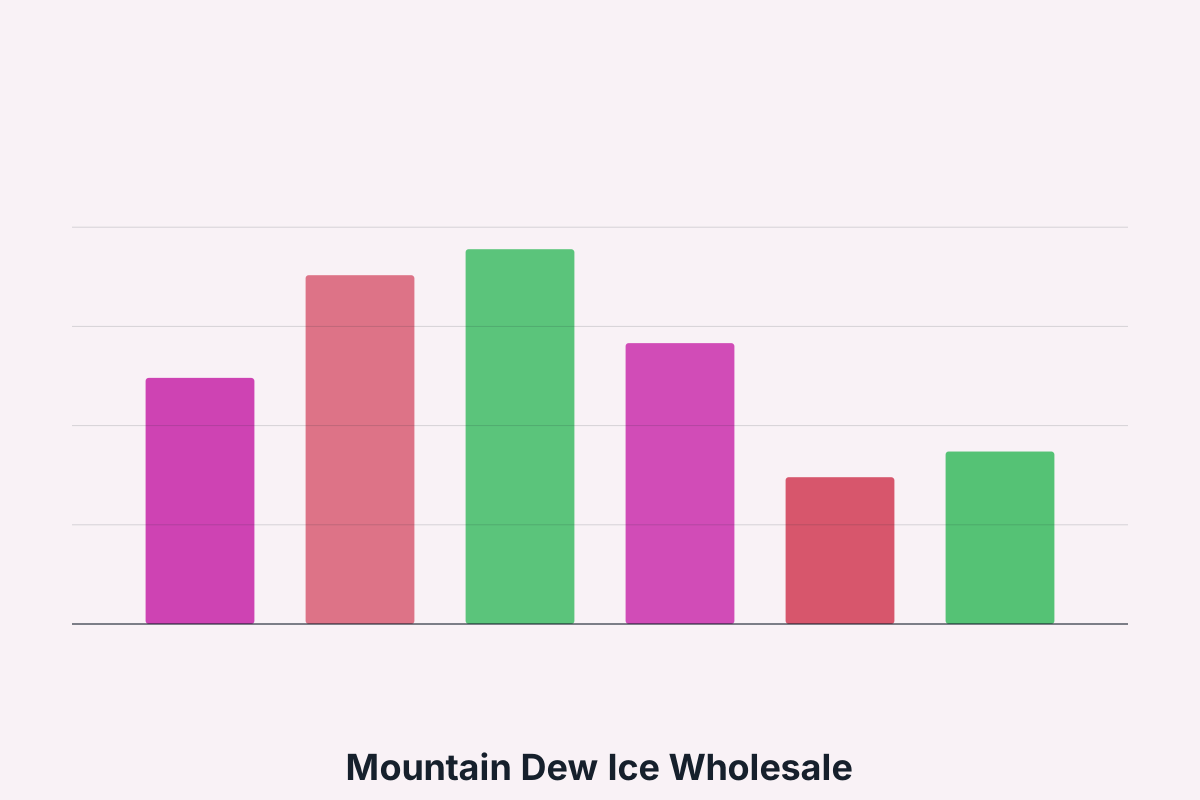
When we write a mountain dew ice specification with a distributor, we fix four things first: the resistance band, the liquid capacity tolerance, the puff count methodology and the packaging master carton. Everything else can flex without changing the customer experience.
| Product category | Open system |
|---|---|
| Resistance band | 1.2 - 1.4 ohm |
| Capacity tolerance | +/- 3% |
| Puff count method | Machine cycle 2s on / 18s off |
| Master carton | 300 units |
| Carton weight | 11.7 kg |
| Shelf life | 24 months |
| Storage | 15-25 C, dry, away from direct light |
Practical Checklist
- Keep sealed retained samples from every production batch.
- Write the complaint threshold into the order terms.
- Check carton dimensions against your freight quote before confirming.
- Ask how the factory measures puff count, then compare like with like.
- Confirm the current customs classification with your own broker.
- Rotate stock by batch code rather than by delivery date.
Frequently Asked Questions
What information do you need to quote?
Target specification, approximate quantity, destination and any packaging requirement. With those four we can usually come back with a costed option the same working day rather than a request for more information.
How do you handle a short shipment?
Cartons are counted and weighed before dispatch and the figures are shared with you. If something is short on arrival, the packing record and the carrier documentation are both available, which keeps the claim straightforward.
What if I only need a small first order?
That is normal and sensible. A mixed carton lets you test mountain dew ice in your own market before committing to a production run, and the specification you approve at that stage carries through to larger orders unchanged.
Can I mix strengths in one order?
In most cases yes, as long as each strength meets the minimum run length. Mixed strength cartons are popular with retailers building their first display because they show the full ladder without over committing.
How are price changes handled on repeat orders?
{K} pricing is reviewed against input costs and volume rather than adjusted casually. Any change is confirmed in writing before the next order is scheduled, with the reason stated so you can judge it yourself.
Next Step
Whatever you decide, decide it against numbers you can check on arrival. That single discipline removes most of the risk from importing mountain dew ice.
Related Reading
- Mountain Dew Ice Slow Moving Stock and Remedial Actions — Latin America
- Mountain Dew Ice Electronic Data Interchange for Large Accounts — Latin America
- Mountain Dew Ice Humidity Control in Coastal Warehouses — Established Chains
- Private Label Mountain Dew Ice: Steps From Idea to Carton — Convenience Retail
- Mountain Dew Ice Safety Stock Levels for Import Programmes — Repeat Orders
- Mountain Dew Ice Coil Wire and Wicking Choices Compared — Step by Step