 VapeWholesaleHub
Mountain Dew Ice Artwork and Dieline Essentials — Freight Included
A good mountain dew ice programme is boring in the best sense: same taste, same draw, same carton count, every single time. Getting there requires a shared vocabulary between you and the factory. Consider this page that vocabulary.
Market Signals
The most durable mountain dew ice lines over the last few years have been unglamorous and consistent. Novelty sells once; reliability sells every month.
Logistics That Protect Margin
Ask your forwarder for the mountain dew ice transit history on your lane, not the advertised schedule. The gap between the two is the buffer you should build into your reorder point.
Carton dimensions for mountain dew ice are a design decision, not a packing afterthought. A few centimetres on the master carton can change how many units fit a pallet, and that repeats on every order.
Pricing and Margin
When mountain dew ice input costs move, ask which component moved. A generic price increase hides whether you are paying for cells, packaging or simply a busy production calendar.
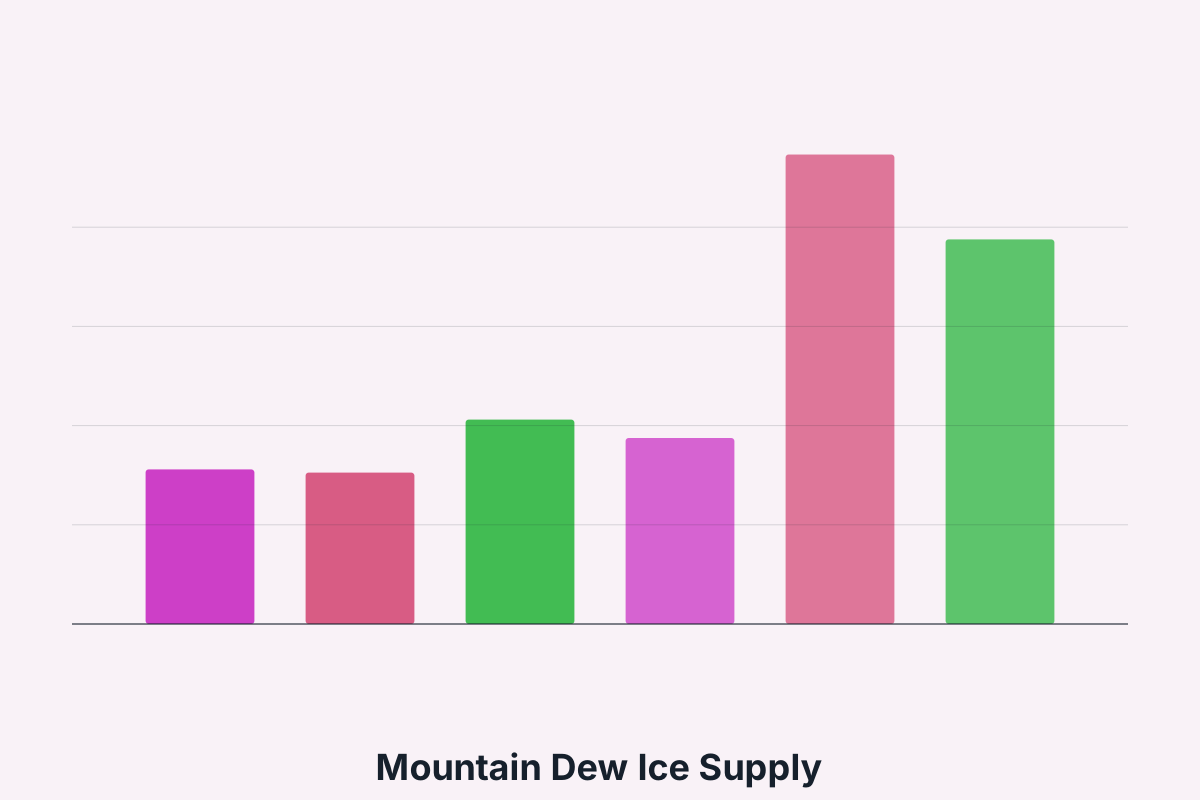
Indicative reference points for planning purposes: entry tier from USD 1.39 per unit at 1000 units, mid tier at USD 0.73, and volume tier at USD 1.04 for full container quantities. These figures move with specification, packaging and freight, so treat them as a shape rather than a quote.
How Mountain Dew Ice Fits the Assortment
Mountain Dew Ice sits at an interesting point in the assortment. It is familiar enough to be an impulse purchase and specific enough to build a repeat pattern around. Treating it as either pure commodity or pure specialty both lead to poor results.
A tight mountain dew ice range with deep availability usually outsells a wide range with thin stock. Customers who find their line in stock come back; customers who are told to wait do not.
Reading a Mountain Dew Ice Spec Sheet
Ask any factory for the same mountain dew ice sample twice, three months apart. If the second sample drifts, the production line is running without statistical control and your reviews will drift with it. Consistency over time is a more useful signal than a single good sample.
Specification sheets are where a mountain dew ice deal is won or quietly lost. Two samples can look and taste the same while using different coil wire, different wicking density and different tolerances on the mouthpiece. Those details decide how the unit behaves in week three rather than minute three.
| Product category | Accessory |
|---|---|
| Resistance band | 0.6 - 0.8 ohm |
| Capacity tolerance | +/- 3% |
| Puff count method | Declared by capacity |
| Master carton | 200 units |
| Carton weight | 11.8 kg |
| Shelf life | 18 months |
| Storage | 15-25 C, dry, away from direct light |
Practical Checklist
- Agree the tolerance band in writing before approving artwork.
- Confirm the current customs classification with your own broker.
- Plan the switch from air to sea freight before you need it.
- Ask how the factory measures puff count, then compare like with like.
- Write the complaint threshold into the order terms.
- Keep sealed retained samples from every production batch.
Frequently Asked Questions
How do you handle a short shipment?
Cartons are counted and weighed before dispatch and the figures are shared with you. If something is short on arrival, the packing record and the carrier documentation are both available, which keeps the claim straightforward.
What happens if my market changes its rules?
Regulations move, and packaging or documentation sometimes has to follow. We keep approved artwork files on hand so that a required change is a reprint rather than a redesign, which keeps the cost and delay down.
Do you provide compliance documents?
Every shipment leaves with the documentation set relevant to your market, including batch records and test reports where required. Your local rules still determine what you must file, so confirm those with your broker before import.
Can you match an existing product I already sell?
Often yes, provided we can measure it properly. Send a physical sample and we will report back on what can be matched, what will differ slightly, and why. An honest gap is more useful than a vague promise.
Next Step
Whatever you decide, decide it against numbers you can check on arrival. That single discipline removes most of the risk from importing mountain dew ice.
Related Reading
- Mountain Dew Ice Quality Control: Tests We Run Before Dispatch — North America
- Mountain Dew Ice Insurance and Cargo Cover Explained — Small Batch Buyers
- Mountain Dew Ice Customer Feedback Loops That Improve Reorders — the Buying Desk
- Mountain Dew Ice Slow Moving Stock and Remedial Actions — Convenience Retail
- Mountain Dew Ice Handling Product Recalls Professionally — a Factory Floor View
- Mountain Dew Ice Insurance Valuation for Held Stock — a Factory Floor View